
BREEDING SERVICES
Back
C3H/HeJ
Strain number : 000659
Common Name: C3H, C3H Heston, C3
- C3H/HeJ mice are used as a general purpose strain in a wide variety of research areas including cancer, immunology and inflammation, sensorineural, and cardiovascular biology.
- C3H/HeJ mice and all other Jackson substrains are homozygous for the retinal degeneration 1 mutation (Pde6brd1), which causes blindness by weaning age, but lack the nob5 allele of Gpr179 (Chang, 2015).
- C3H/HeJ can develop opaque eyes and some mice may arrive with this condition.
- White belly spots, ranging in phenotype from a few white hairs to a defined spot are common in C3H/HeJ mice.
- There is also a high incidence of hepatomas in C3H mice (reportedly 72-91% in males at 14 months, 59% in virgin females, 30-38% in breeding females).
- Despite the lack of exogenous mouse mammary tumor virus (MMTV), virgin and breeding females may still develop some mammary tumors later in life.
- C3H/HeJ mice, fed an atherogenic diet (1.25% cholesterol, 0.5% cholic acid and 15% fat), fail to develop atherosclerotic aortic lesions in contrast to several highly susceptible strains of mice.
- C3H/HeJ mice spontaneously develop alopecia areata (AA) at a reported incidence of approximately 0.25% by 5 months of age.
- In older mice (12-18 months old), incidences as high as approximately 20% are reported.
- Females as young as 3-5 months can develop AA, but onset typically is delayed until after 6 months in males.
- Alopecia areata can be surgically-induced by grafting a small piece of skin from an older, donor animal with AA onto a younger, isogenic C3H/HeJ recipient.
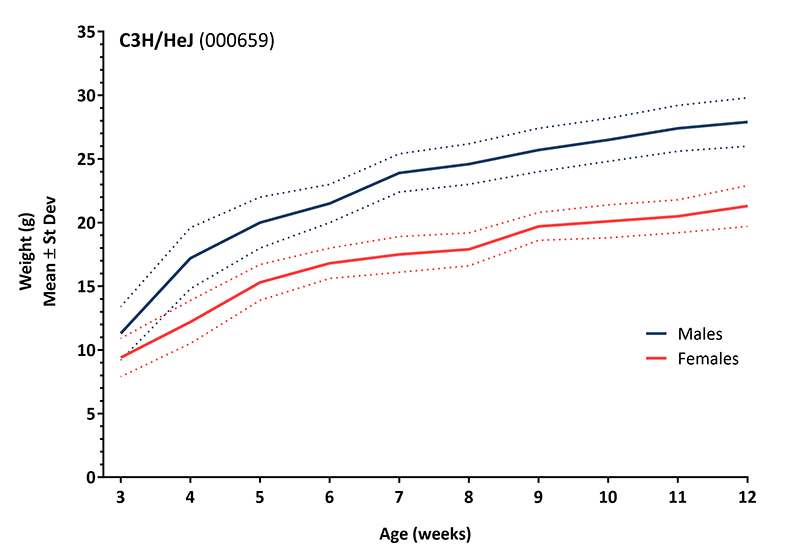
Body Weight Information
For more detailed information please visit